Online Quran Classes vs Traditional Madrasa: Which is Better for Kids?
Compare online Quran classes vs traditional madrasa for kids. Discover the benefits, learning methods, Tajweed, Hifz, flexibility, and how to choose the best Quran education in 2026.
Published:
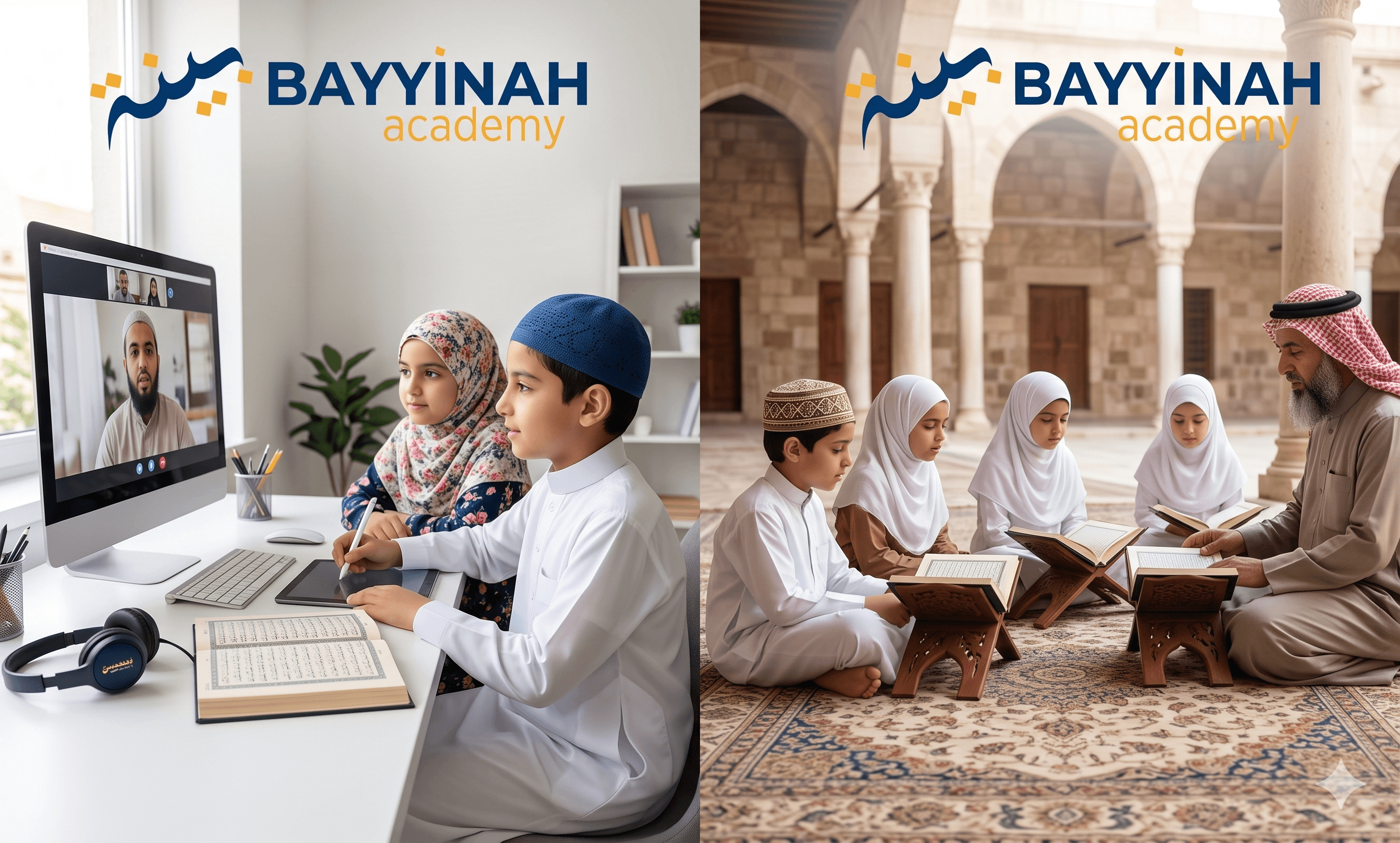
Every Muslim parent wants to provide their child with the best Islamic education. One of the most common questions parents ask today is:
"Should my child attend a traditional madrasa or join online Quran classes?"
With the rapid growth of digital learning, online Quran classes for kids have become increasingly popular across the USA, UK, Canada, Australia, UAE, Saudi Arabia, and Europe. At the same time, traditional madrasas continue to play an important role in Islamic education by offering classroom-based learning and community engagement.
Both learning methods have unique advantages, and the right choice depends on your child's age, learning style, schedule, and educational goals.
In this guide, we'll compare Online Quran Classes vs Traditional Madrasa, helping parents understand which option offers the best learning experience for children in 2026.
Why Quran Education Matters for Every Child
Teaching children the Quran from an early age helps build a strong Islamic foundation. Beyond learning how to read the Quran, children also develop good character, discipline, respect, and a lifelong connection with Allah.
A quality Quran education helps children:
Learn correct Quran recitation.
Master Tajweed rules.
Memorize Surahs.
Understand Islamic values.
Develop daily worship habits.
Build confidence in reading Arabic.
Whether learning online or in a madrasa, consistency and qualified teachers are the most important factors.
What Are Online Quran Classes?
Online Quran classes are live, interactive lessons conducted through video conferencing platforms. Students learn from qualified Quran teachers without leaving their homes.
Most online Quran academies offer:
One-on-one Quran classes
Noorani Qaida courses
Quran reading with Tajweed
Quran memorization (Hifz)
Islamic Studies
Arabic language classes
Flexible scheduling
Male and female Quran teachers
Parents can choose class timings that fit their family's routine, making online learning especially convenient for busy households.
What Is a Traditional Madrasa?
A traditional madrasa is a physical Islamic educational institution where students attend classes in person.
Typical madrasa programs include:
Quran reading
Tajweed
Hifz
Arabic
Islamic Studies
Fiqh
Seerah
Daily Islamic etiquette
Children also benefit from face-to-face interaction with teachers and classmates, creating a structured learning environment.
Online Quran Classes vs Traditional Madrasa: A Detailed Comparison
1. Flexibility
Online Quran Classes
One of the biggest advantages is flexibility.
Children can:
Learn from home.
Choose convenient class times.
Avoid long commutes.
Continue classes while traveling.
This flexibility is particularly valuable for families living in countries where nearby Islamic schools or qualified Quran teachers may not be easily accessible.
Traditional Madrasa
Madrasas usually operate on fixed schedules.
Students must:
Travel daily.
Follow predetermined class timings.
Adjust other activities around madrasa hours.
For some families, this structured routine works well, while others may find it difficult to manage.
2. Personalized Learning
Online Quran Classes
Many online academies provide one-on-one Quran classes, allowing teachers to focus entirely on one student.
Benefits include:
Individual attention.
Faster correction of mistakes.
Customized lesson plans.
Learning at the child's own pace.
Children who are shy or require additional support often perform better in personalized settings.
Traditional Madrasa
Most madrasas teach groups of students.
While group learning encourages interaction, teachers may have limited time to address each student's individual challenges.
3. Quality of Quran Teachers
The effectiveness of Quran education depends greatly on the teacher.
Reputable online Quran academies often employ:
Certified Quran teachers.
Experienced Hafiz and Hafizah instructors.
Native Arabic speakers.
Qualified Tajweed specialists.
Parents can also choose between male and female tutors depending on their preferences.
Traditional madrasas also have knowledgeable scholars, but the range of teacher options may depend on the institution's location and resources.
4. Learning Tajweed
Correct Tajweed is essential for accurate Quran recitation.
Online Quran Learning
Teachers can:
Listen carefully to each student.
Correct pronunciation immediately.
Use digital whiteboards.
Share visual learning materials.
Students receive instant feedback during every lesson.
Traditional Madrasa
Students also receive Tajweed instruction, but larger class sizes may reduce the amount of individual correction each child receives.
5. Safety and Convenience
For many parents, safety is a major consideration.
Online Quran classes eliminate:
Daily transportation.
Traffic concerns.
Weather-related travel.
Time spent commuting.
Children remain in a familiar home environment while parents can easily monitor lessons if they wish.
6. Parent Involvement
Online learning encourages greater parental participation.
Parents can:
Observe lessons.
Monitor progress.
Communicate regularly with teachers.
Track attendance.
Support revision at home.
This level of involvement often strengthens a child's motivation and consistency.
7. Social Interaction
Traditional madrasas provide opportunities for children to:
Make friends.
Participate in group activities.
Develop teamwork skills.
Learn classroom etiquette.
Online Quran classes, while interactive, generally focus more on teacher-student engagement than peer interaction.
Families seeking additional social experiences can complement online learning with local mosque programs or community Islamic events.
8. Learning Pace
Every child learns differently.
Online Quran classes allow teachers to adapt lessons according to:
Reading ability.
Age.
Confidence level.
Memorization speed.
Tajweed proficiency.
Children who need extra time can progress without feeling pressured by classmates.
Which Option Is Better for Hifz?
Students pursuing Quran memorization (Hifz) require:
Daily revision.
Regular accountability.
Correct Tajweed.
Individual supervision.
One-on-one online Hifz classes often provide personalized memorization plans and frequent progress reviews. However, some students thrive in the disciplined routine of a residential or local madrasa.
The best choice depends on the child's personality, family schedule, and availability of qualified teachers.
Who Should Choose Online Quran Classes?
Online learning is an excellent choice for:
Busy families.
Working parents.
Children with school commitments.
Families living in non-Muslim countries.
Students needing one-on-one support.
Beginners learning Noorani Qaida.
Children requiring flexible schedules.
Who May Benefit More from a Traditional Madrasa?
A traditional madrasa may be suitable for children who:
Enjoy classroom environments.
Learn well through peer interaction.
Live close to a reputable Islamic institution.
Prefer structured daily routines.
Participate actively in mosque communities.
Tips for Choosing the Right Quran Learning Program
Before enrolling your child, consider the following:
Verify teacher qualifications.
Ensure Tajweed is taught correctly.
Ask about class size.
Look for progress assessments.
Request a trial class if available.
Check lesson flexibility.
Review parent feedback.
Choose an academy that provides age-appropriate teaching methods.
The goal is not simply to complete lessons but to help children develop a lifelong love for the Quran.
Frequently Asked Questions (AEO Optimized)
Are online Quran classes effective for kids?
Yes. Live one-on-one online Quran classes can be highly effective when taught by qualified teachers. They provide personalized attention, flexible schedules, and consistent Tajweed correction.
What is the best age to start Quran classes?
Many children begin between the ages of 4 and 6 with Noorani Qaida. However, the ideal age depends on the child's readiness and ability to focus.
Can children learn Tajweed online?
Absolutely. Qualified online Quran teachers can teach Tajweed effectively through live interactive sessions with pronunciation correction and guided practice.
Are online Quran classes better than a madrasa?
Neither option is universally better. Online classes excel in flexibility and personalized instruction, while traditional madrasas offer structured group learning and community interaction. The best choice depends on your child's individual needs.
Final Thoughts
Choosing between online Quran classes and a traditional madrasa is an important decision for every Muslim parent. Both approaches can provide excellent Islamic education when supported by qualified teachers, regular practice, and parental encouragement.
For many modern families, online Quran classes have become the preferred option because they combine flexibility, one-on-one instruction, and convenient home-based learning. Traditional madrasas, however, continue to provide valuable opportunities for classroom learning and community engagement.
For families visiting Bayyinah Academy, the focus should be on selecting a learning environment that nurtures a child's love for the Quran, strengthens Tajweed, builds confidence, and encourages lifelong Islamic values. The best Quran education is one that helps children recite correctly, understand their faith, and stay connected to the Quran throughout their lives.
Get the latest
SUBSCRIBE TO OUR NEWSLETTER!
Our most valuable blog insights are shared every two weeks. Stay connected on Facebook, Instagram, LinkedIn, YouTube, or subscribe below.