Can AI Replace Quran Teachers? The Future of Online Islamic Learning
Explore whether AI can replace Quran teachers and how artificial intelligence is shaping the future of online Islamic learning, Quran education, and Quran memorization.
Published:
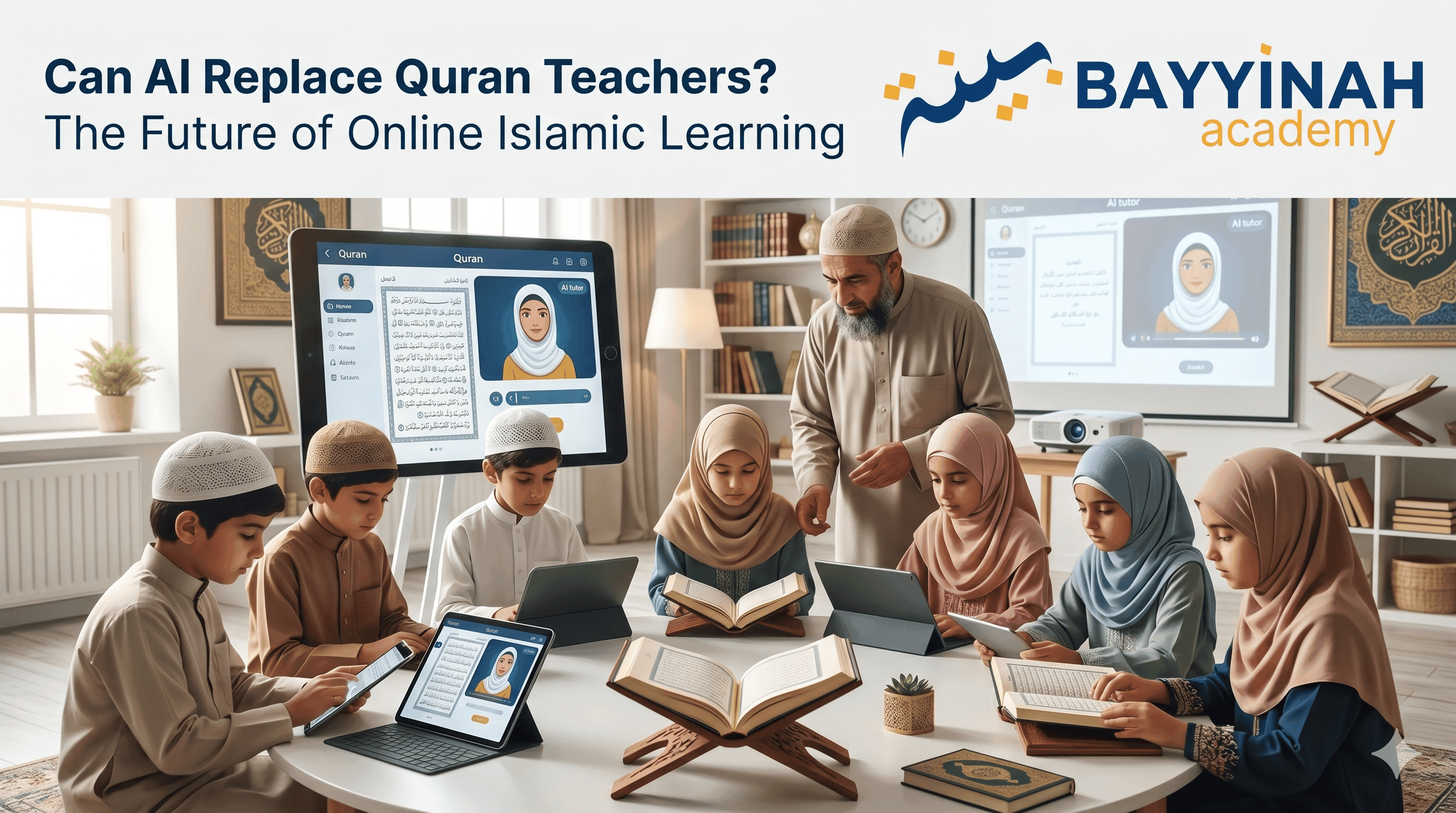
Artificial Intelligence (AI) is transforming industries worldwide, from healthcare and education to finance and customer service. The Islamic education sector is also experiencing rapid digital transformation. Today, students can learn Quran online, attend virtual Islamic classes, use AI-powered learning platforms, and receive instant feedback on Quran recitation.
As technology continues to evolve, an important question arises: Can AI replace Quran teachers?
The answer is more complex than a simple yes or no. While AI-powered tools are revolutionizing online Quran learning, they cannot fully replicate the knowledge, wisdom, mentorship, and spiritual guidance provided by qualified Quran teachers. Instead, AI is likely to become a powerful companion that enhances Islamic education rather than replacing human instructors.
The Rise of AI in Online Islamic Learning
The demand for online Quran classes, Quran learning apps, and Islamic education platforms has increased significantly over the last few years. Modern learners seek flexibility, personalized learning experiences, and instant access to educational resources.
AI technology is helping meet these demands through:
AI-powered Quran learning apps
Smart Tajweed correction tools
Speech recognition for Quran recitation
Personalized Islamic learning platforms
AI-generated study plans
Automated progress tracking
These innovations are making Quran education more accessible for students worldwide.
What AI Can Do for Quran Learning
1. Improve Quran Recitation Practice
One of the most promising applications of AI is Quran recitation analysis. Advanced speech recognition systems can listen to recitation and identify pronunciation errors.
Students can receive immediate feedback on:
Letter pronunciation
Basic Tajweed mistakes
Reading fluency
Recitation speed
This allows learners to practice independently between classes.
2. Personalized Learning Experience
AI systems can analyze a student's learning behavior and create customized study plans.
For example, AI can:
Identify weak areas
Recommend revision topics
Track memorization progress
Suggest learning resources
Create personalized schedules
This level of personalization helps students learn at their own pace.
3. 24/7 Access to Learning Resources
Unlike human teachers, AI tools are available around the clock.
Students can:
Ask questions anytime
Review lessons repeatedly
Access learning materials instantly
Practice Quran reading independently
This flexibility is particularly beneficial for busy professionals and students living in different time 1zones.
4. Support Quran Memorization (Hifz)
Many modern Quran learning platforms use AI to support memorization.
Features include:
Daily revision reminders
Memorization tracking
Progress analytics
Recitation assessment
Learning performance reports
These tools help students stay consistent with their Hifz journey.
Why AI Cannot Fully Replace Quran Teachers
While AI offers numerous advantages, there are critical aspects of Islamic education that require human guidance.
1. Spiritual Mentorship Cannot Be Automated
The Quran is not simply a textbook. It is a divine source of guidance that shapes character, faith, and spiritual development.
Qualified Quran teachers provide:
Spiritual advice
Moral guidance
Personal encouragement
Islamic character development
Real-life application of Quranic teachings
AI can deliver information, but it cannot nurture a student's spiritual growth in the same way a human mentor can.
2. Deep Understanding of Tafsir Requires Scholars
Understanding the Quran often involves complex interpretations, historical context, and scholarly explanations.
AI can summarize information, but it cannot replace:
Qualified Islamic scholars
Experienced Quran teachers
Traditional Islamic learning methodologies
Islamic knowledge requires authenticity, scholarly verification, and contextual understanding that AI alone cannot guarantee.
3. Human Teachers Understand Emotions
Every student learns differently.
A Quran teacher can recognize:
Motivation challenges
Learning difficulties
Emotional struggles
Confidence issues
Teachers adapt their methods based on individual student needs. AI may identify patterns, but it cannot truly understand human emotions and personal circumstances.
4. Correcting Advanced Tajweed Requires Expertise
Although AI can detect some pronunciation errors, advanced Tajweed rules often require expert listening and correction.
Experienced Quran teachers understand:
Subtle pronunciation differences
Advanced Tajweed applications
Regional accents
Student-specific recitation challenges
This level of expertise remains difficult for AI systems to fully replicate.
The Future of Online Islamic Learning
The future is not about AI replacing Quran teachers. Instead, it is about collaboration between technology and human expertise.
A modern Islamic learning model may look like this:
AI Handles:
Progress tracking
Revision reminders
Practice assessments
Personalized learning plans
Interactive exercises
Quran Teachers Handle:
Tajweed mastery
Tafsir explanation
Spiritual development
Character building
Student mentorship
This blended approach combines the efficiency of technology with the wisdom of traditional Islamic education.
Benefits of Combining AI and Human Quran Teachers
The most effective Quran education systems in the future will likely integrate both AI and human instruction.
Advantages include:
Better Learning Outcomes
Students receive personalized support while maintaining authentic Islamic guidance.
Increased Accessibility
More learners worldwide can access quality Quran education.
Improved Engagement
Interactive AI tools make learning more engaging and motivating.
Enhanced Retention
Regular assessments and revision systems improve long-term knowledge retention.
Flexible Learning
Students can learn anytime while still benefiting from live teacher interaction.
Challenges of AI in Islamic Education
Despite its benefits, AI adoption in Islamic learning also presents challenges:
Risk of inaccurate religious information
Lack of scholarly verification
Overdependence on technology
Reduced human interaction
Ethical concerns regarding religious guidance
For this reason, AI-generated Islamic content should always be reviewed by qualified scholars and experienced educators.
Will AI Replace Quran Teachers in the Future?
The most realistic answer is no.
AI can become an excellent educational assistant, but it cannot replace the spiritual wisdom, mentorship, compassion, and authentic Islamic knowledge of qualified Quran teachers.
Islamic education is not merely about transferring information. It is about nurturing faith, character, and understanding. These human qualities remain beyond the reach of artificial intelligence.
As technology advances, the role of Quran teachers may evolve, but their importance will remain central to Islamic learning.
Conclusion
Artificial Intelligence is transforming the landscape of online Islamic learning, making Quran education more accessible, personalized, and efficient. From AI-powered recitation tools to smart memorization systems, technology offers exciting opportunities for students worldwide.
However, when it comes to spiritual mentorship, Quran interpretation, Tajweed mastery, and character development, human Quran teachers remain irreplaceable.
The future of Islamic education is not AI versus Quran teachers—it is AI supporting Quran teachers. By combining innovative technology with authentic Islamic scholarship, students can enjoy a richer and more effective learning experience than ever before.
Related Post
How to Memorize the Quran Faster: 15 Proven Hifz Techniques That Actually Work
Discover 15 proven Hifz techniques to memorize the Quran faster and retain it longer. Learn effective Quran memorization methods with Bayyinah Academy.
Read More
Best Daily Habits for Students Memorizing the Quran (Hifz Tips)
Discover the best daily habits for students memorizing the Quran with practical Hifz tips. Learn effective Quran memorization techniques, revision methods, and daily routines to become a successful Hafiz in 2026.
Read More
The Power and Importance of Surah Al-Fatihah: The Heart of Every Prayer
Surah Al-Fatihah is the first chapter of the Quran, but its importance goes far beyond being just the opening. It is the most frequently recited Surah, read multiple times every single day in Salah. Yet, many of us recite it without fully understanding its depth.
Read MoreGet the latest
SUBSCRIBE TO OUR NEWSLETTER!
Our most valuable blog insights are shared every two weeks. Stay connected on Facebook, Instagram, LinkedIn, YouTube, or subscribe below.